By Sage Cassell-Rosenberg
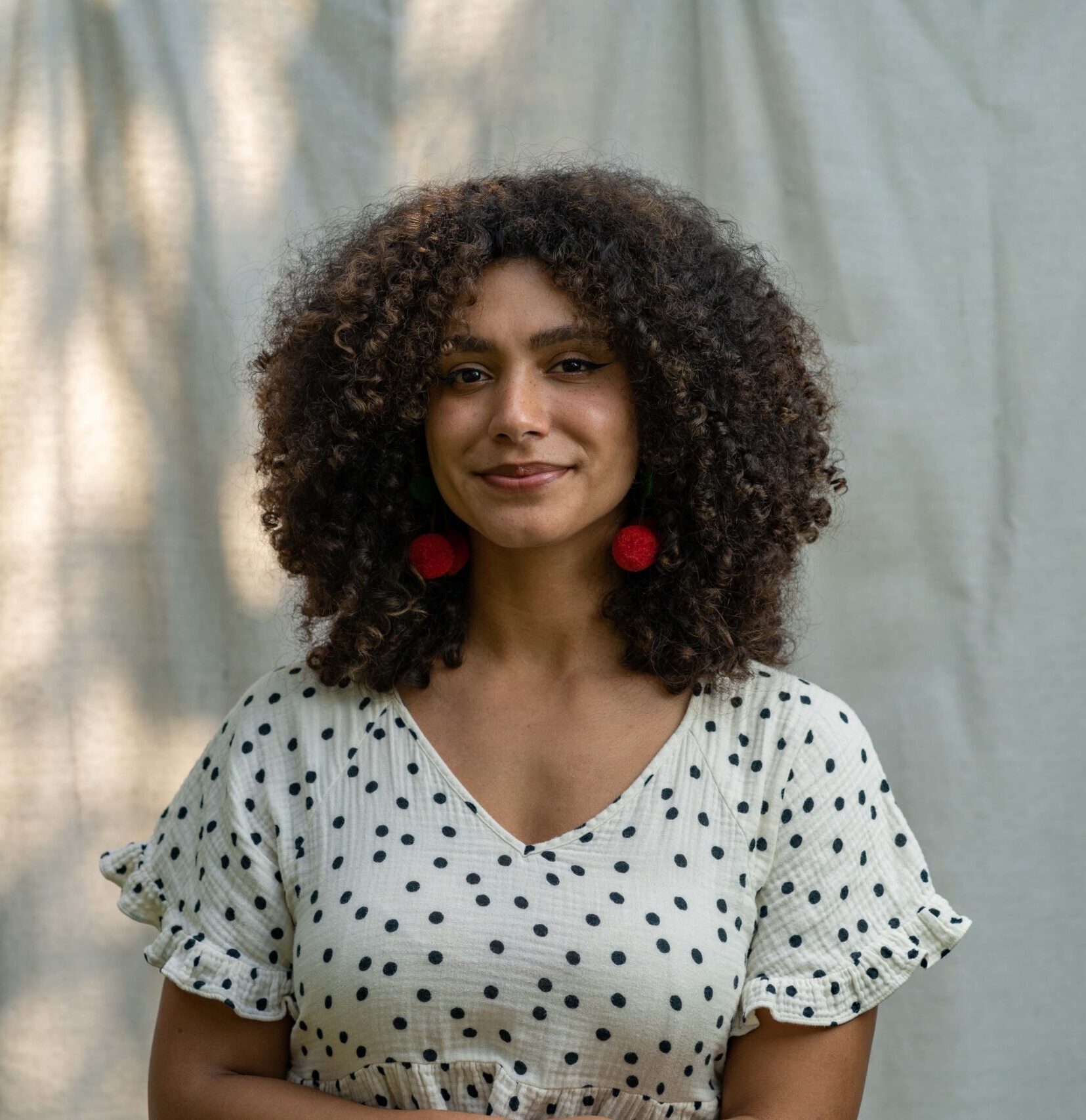 Rachel Runya Katz (she/they) is a Seattle-based writer, scientist, and lover of stories that make us feel deeply. Their novels center on characters who hold layered identities, offering romance that is tender, complicated, and real. In this Keshet Conversation, we talk about writing from the intersections of queerness, Jewishness, Blackness, and love, and what it means to craft characters who feel like whole people rather than symbols.
To start us off, tell us a little bit about yourself and what drew you to writing.
I am a biomedical engineer by training, and I am a scientist. I have always loved reading. I used to make up stories as a kid, which I think is pretty common. I wrote a full-length One Direction fanfiction in college, which I think was basically my first romance novel.
As an early adult, I thought I had to read mostly literary fiction.Then COVID happened, I watched way too much TV, wanted to stop doing that, but did not have the emotional capacity for literary fiction where the main character might die.So I picked up some romance. At that time, major publishers were finally releasing books that were unambiguously queer, interracial, and multiracial. I picked some up and fell in love with the genre. And then I just started writing my own.
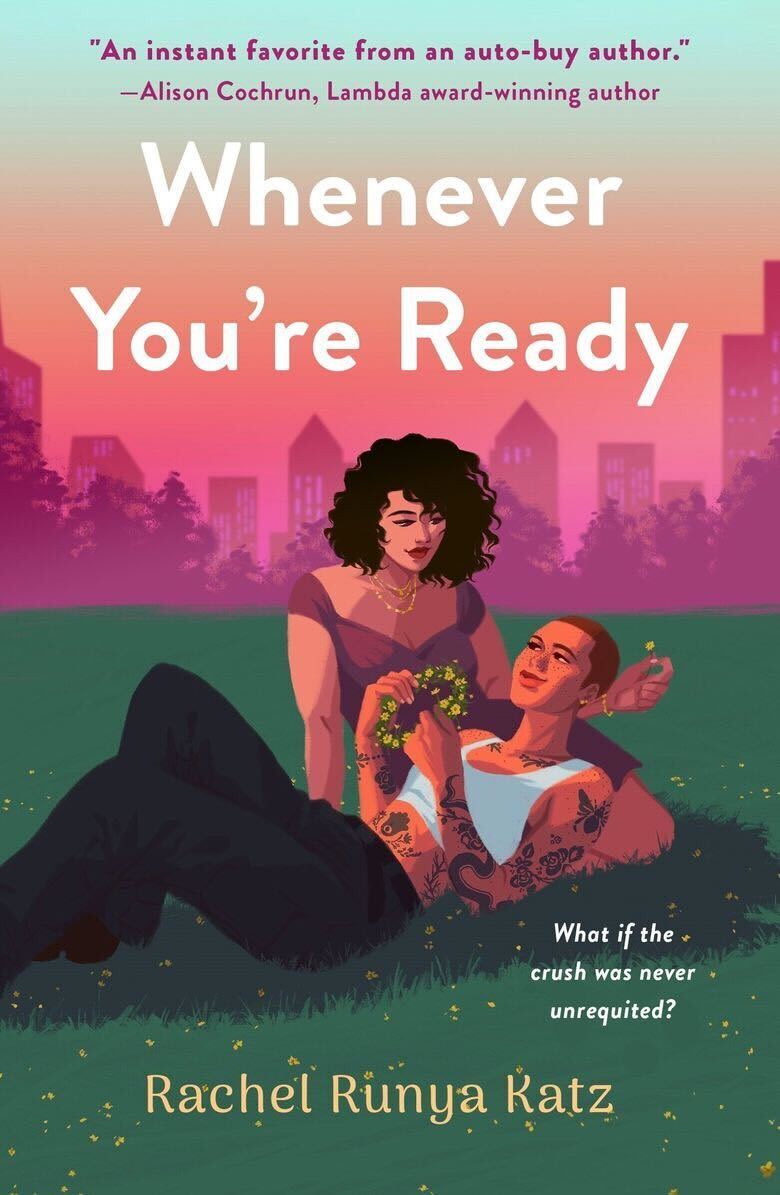
I’m currently reading one of your books, Whenever You’re Ready, and it means so much to encounter characters who embody identities like being a queer Jew of Color. How do you approach bringing these layered characters to life?
Thank you, that means a lot. A big part of it is writing the book that only I can write. People say to do that regardless of identity, but it hits differently when you sit at the intersection of historically marginalized identities that aren’t often centered. There’s a sense of, What am I bringing to the table that others aren’t?
In many ways, the character work feels natural because it reflects the life I live.I am a Black Jew, I am queer, and many people in my community move through similar layers. So those textures are already present.And I write in a very character-driven way. I start with the characters, not with plot or trope. I often have bits of dialogue or images in my head long before I know the story’s structure. Because of that, identity is not something I add in later. It is built in from the start. I am trying to craft a character who feels like a person who is treated with care rather than as a stereotype. That comes from listening and being willing to take feedback.
What do you hope readers take away, whether they share those identities or are encountering them for the first time?
I hope they feel something. Enjoyment, crying, whatever it is, I hope the experience feels worthwhile.
I sometimes get emails that go something like, “My name is *blank*. I am *blank* years old. I am a White Christian mom in a Midwestern state, and I actually loved your book.” It’s funny because there is often a tone of, “I don’t think I’m who you wanted to read this…”, because they’re so different from the people in the book, but that’s not true! I want them to read it too! The book may not be directly about them, but it’s published for everyone to read.
My whole life, I’ve been reading books about straight White Christian people. Like, you don’t have to share the identities of the folks you’re reading about to care about their story, you know what I mean?
I really love it when readers reach out, especially those who say they connected with something they aren’t used to seeing. It’s incredibly touching. But I also don’t want people to read my books and treat them as if they’re documentaries about “what it is to be a queer Jew of Color.” I’m like, no, that’s one character who is a queer Jew of Color. It’s not an anthropological study; that’s not what it’s meant to do. If you’re reading it and you’re criticizing it on that basis, you’re coming at it from the wrong angle.
I tend to joke that no one reads an Emily Henry novel and then writes a review saying, “I know straight White women, and they don’t act like this. I think this bad straight White woman representation” or “I learned so much about the universal experience of straight White women,” We understand that her books are stories about particular characters.
I want that same approach with my work. If someone is seeking out more diverse stories, that’s wonderful. But remember… It’s romance. If you’ve turned it into homework, you’ve done something wrong.
Your books are often described as “rom-trom-coms,” mixing humor, romance, and trauma. What does that balance mean to you?
That term actually came from a friend of mine, Abby, at a Shabbat gathering. I had just gotten my agent, and I was calling my book a rom-com, and my agent was like, “Well, you’ve given your characters a lot of trauma to call it a rom-com.” And Abby said, “Oh, it’s a rom-trom,” and then, “A rom-trom-com.” And she was like, “That’s very Jewish,” and I think that is true. A lot of Jewish comedy, trauma, and drama all get wrapped up together.
For me, I do not find pure fluff to be the most escapist. I actually think something like Whenever You’re Ready is more escapist, because if you can lose your best friend, go on a grief road trip with someone you have been in love with for a long time, and also learn that your great great great grandparents were slaveholders, and you are Black, and you are dealing with all of that, and still come out the other end able to fall in love and be okay — that feels like real hope to me.
If I write a book where nobody has to deal with anything difficult and then they get a happy ending, it is like, well, of course they get a happy ending. That is easy. I am interested in what it looks like to still choose love when life has not been easy. That is the balance I am working with.
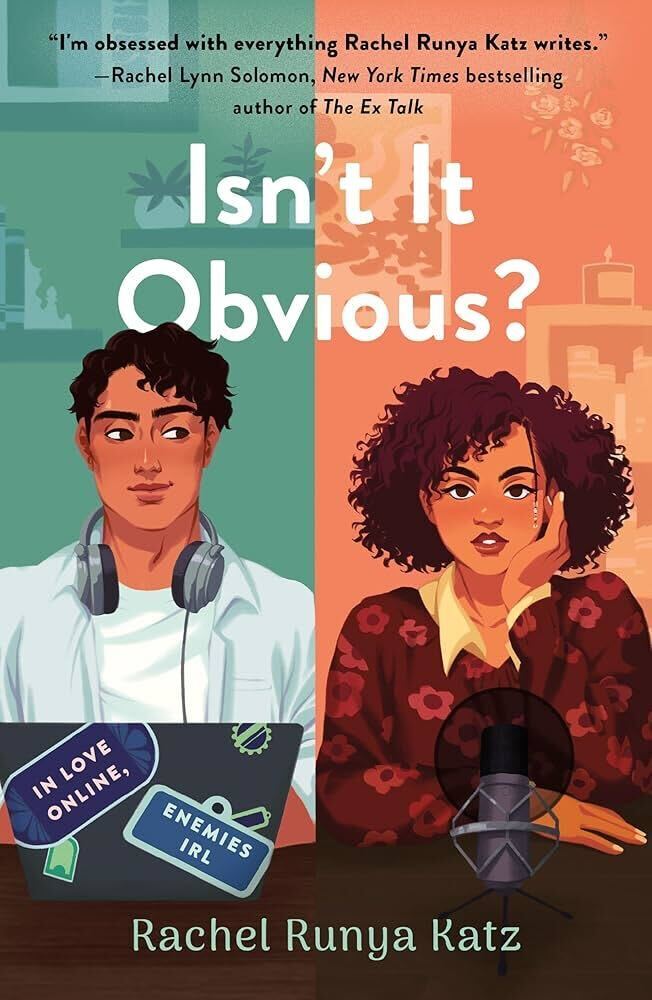
And finally, without spoilers, three words to describe your upcoming book: Isn’t It Obvious?
Hidden identity. That’s two words, but it’s referring to one thing. And then… books. There’s a book podcast and a high school librarian who runs a queer book club. So, just lots and lots of books!
Where you can get the book: https://www.rachelrunyakatz.com/isnt-it-obvious
Instagram: @rachelrunyakatz
Bluesky: @rachelrunyakatz
Interested in more QJOC art? Check out Flowers for Our People.
Keshet envisions a world in which all LGBTQ+ Jews and our families can live with full equality, justice, and dignity. Stay connected by joining our email list and following us on social media.





National Office - Boston
1860 Washington St.
Newton, MA 02466
Phone: 617.524.9227
New York / Bay Area / Chicago / Florida / Texas