By Sage Cassell-Rosenberg
July is Disability Pride Month, commemorating the signing of the Americans with Disabilities Act (ADA) on July 26, 1990. This Disability Pride Month, we celebrate the diversity, resilience, and lived experiences that strengthen our Jewish community. We had the privilege of sitting down with Ari Fernandez (they/them), Founder & Executive Director of Olam Shelanu, an educator, ritual leader, and disability inclusion specialist in the Jewish nonprofit sector, to reflect on disability pride, belonging, and building Jewish communities where everyone can fully participate.
Tell us a bit about yourself!
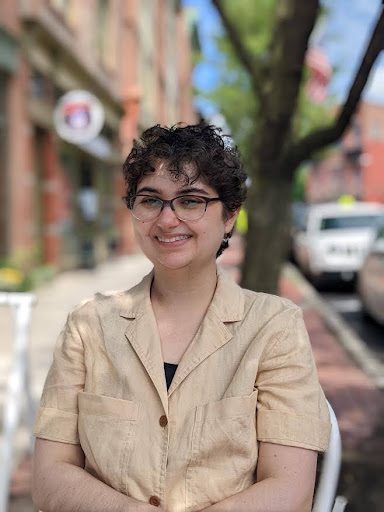
Hello! I am Ari. My pronouns are they/them. I often describe myself as a queer, Latine, trans, disabled, Ashkenazi Jewish person. I am currently studying with SVARA: A Traditionally Radical Yeshiva, which centers queer experience and makes the case that our rabbinic ancestors were queer. I’m studying with them through their Gemirna Kollel, and I plan to become ordained as a rabbi eventually following this path.
I live in Atlanta, Georgia, on Muscogee land, with my found family, whom I love with all my heart and am very grateful for. I’m also getting used to saying this, but I’m an entrepreneur! I’m the Founder and Executive Director of Olam Shelanu, which aims to create more inclusive environments through low-barrier ritual, accessibility consulting, and Jewish education.
What does Disability Pride Month mean to you personally?
My disabilities and I have been on a journey. I have a variety of chronic illnesses, and I began breaking bones because of this when I was 18 months old. I remember asking my dad once if he would take away my disability or cure me if he could, and he said that he would. Even though I was in middle school, that didn’t sit well with me. I remember thinking, “But then I wouldn’t be who I am.”
I was kind of raised to think, “If only I could change this thing,” or, “If only I could get on this certain medication, everything would be fixed, and I would be able to live a normal life.” After a series of surgeries in college, I became more disabled and had to reckon with what it meant to lose some of my abilities. At the same time, I happened to be enrolled in a senior seminar on disability philosophy. As I was coming to terms with becoming more disabled, I was learning that there is pride and joy in being disabled and that there’s this whole lens through which we can view the world: the Disability Justice lens. That was a game changer.
Is there anything you wish more people understood about the word “pride” in Disability Pride Month?
Pride in my disability means honoring my differences from a not-yet-disabled person. And notice I say “not-yet-disabled,” because everyone, if they’re lucky enough, will grow old enough to become disabled or may become disabled in some other way.
I take pride in the ways my disabilities have taught me to think differently, problem-solve differently, and manage myself. I know my limits. I know what I can and can’t do. I think it’s really important to be proud of where you are in your journey and where you come from.
I think the disability community is particularly special because we can recognize the humanity in each other, no matter what. We recognize that we’re all B’tzelem Elohim, made in the Divine image. I know my brain works differently than other people’s, and I know my body works differently than other people’s, and I take pride in those individual quirks. I view them as strengths.
Many barriers disabled people face in Jewish communal spaces aren’t actually created by their bodies or minds, but by the way our communities are designed and the assumptions they’re built on. What are some barriers you wish more people recognized?
When we “crip” a space, a term I’ve reclaimed in a similar way that queer people have reclaimed the word “queer,” we have to recognize that accessibility isn’t always about choosing the most obvious solution. It’s about listening to the actual people in the room and understanding what they need.
For example, I was recently at a conference where a microphone was being used to accommodate a Hard-of-Hearing person. On the surface, that seems like the obvious accessible choice. But we were a small group in a very large room, and the microphone created an echo that actually made it harder for their hearing aids to pick up what was being said. What worked best for that person was actually just sitting closer to the presenter.
I think it’s important to recognize the limitations of the idea that there can be one universal solution. We have to take into account the actual people who are going to be in the room. That’s why I’m such a big fan of asking at every event, “What are your accessibility needs?” I have a dynamic disability, which means my needs change daily, so I need to be asked that question every time.
Something else I don’t think not-yet-disabled people always realize is the amount of preparation it can take for a disabled person to show up in a space and be able to take care of their body and mind. The more information we have, the better.
If you tell me there are stairs, for example, I still need to know: Are they steep? Are they narrow? Is there a handrail? What material are they made of? Are they inside or outside? The more accessibility information you can provide upfront, the less work disabled people have to do just to figure out whether we can participate.
If a synagogue, Jewish organization, or community leader wanted to take one meaningful step toward becoming more accessible and welcoming, where would you encourage them to begin?
Don’t wait until the first person, or even the first person brave enough to say what they need, shows up before you make a change. Be proactive. Do the research and put in the time to make your policies and practices more accessible.
There’s a story I like to tell about a shopkeeper who has stairs leading into his store. He says, “I don’t need a ramp because I don’t have any wheelchair using customers.” But the reality is that if he had a ramp, he might have wheelchair using customers. And it wouldn’t only benefit them. Families with strollers and delivery people would also have an easier time getting into the store.
About 1 in 4 Americans is disabled. That’s a huge portion of the population. When accessibility becomes standard practice, people don’t have to disclose something personal or feel like they’re begging for what they need just to participate. If your organization already has policies and practices in place that support disabled people, more disabled people will feel able to show up.
And be willing to change those policies. You have to acknowledge that you’re not perfect and you’re not going to nail everything the first time. Accessibility will always be a work in progress, and you have to be open to people giving you feedback.
Part of “cripping” our spaces is also understanding that disabled people are the experts on our own needs. Be a mirror to how someone talks about their disability, how they treat their disability, and the amount of pride they have or don’t have, and mirror that back. It’s a journey for everyone. Follow the person’s lead rather than assuming you already know what accessibility should look like for them.
For many disabled people, especially those of us who hold multiple, intersecting marginalized identities, asking for what we need can come with the fear of being seen as difficult, demanding, or “too much.” What would you want someone who’s carrying that fear to hear?
Keep asking for what you need! You’re not too much, and you deserve to have your needs met. Remember that it’s not enough to just survive a situation. You really need to be able to thrive, and to do that, you need to take up more space.
I think it’s important to remember that there are people who are there to support you. Sometimes it takes time to find your people, especially when you’re disabled, but they are out there.
Disability Pride Month is also a celebration! As we wrap up, what’s something about your life, your community, or your identity that’s bringing you joy these days?
There’s a song I really love called “I Love You” by Rena Branson from their album In Doing & In Dreaming. Sometimes when people say “I love you,” it’s hard to believe them because you think you’re too much of a burden. I’ll put on that song and remind myself: No, people do love me. My family, both biological and chosen, love me with all my disabilities, all my quirks, and my complicated relationship with the world. They still love me unconditionally.
I’ve also been loving The Way Disabled People Love Each Other by Leah Lakshmi Piepzna-Samarasinha. If you’re looking for disabled community and want to feel less alone, it’s such a beautiful poetry collection.
Anything else you’d like to share before we wrap up?
As I said, I’m the brand new Founder and Executive Director of Olam Shelanu! We’re available for accessibility consulting and Jewish education. I’m studying Talmud and have a special interest in layering Talmud with Critical Disability Theory and Queer Theory, so hit me up for some juicy, sparkly, crip, queer Talmud!
I’m also always open and excited about leading a Shabbat service, High Holiday service, or ritual for your own personal growth. You can find Olam Shelanu at olamshelanu.org or on Instagram at @OlamShelanu.
Keshet envisions a world in which all LGBTQ+ Jews and our families can live with full equality, justice, and dignity. Stay connected by joining our email list and following us on social media.


National Office - Boston
1860 Washington St.
Newton, MA 02466
Phone: 617.524.9227
New York / Bay Area / Chicago / Florida / Texas