By Keshet
In this time of dizzying and harmful attacks on the transgender and nonbinary communities, it is more important than ever that Jewish communities clearly and explicitly reaffirm their commitments to the dignity of transgender and nonbinary people. Along with internal steps to be safe and respectful communities and the ability to locate and refer to concrete resources, public statements can be a part of responding to this moment.
There is no one-size-fits-all statement that works for each organization or audience. However, we at Keshet are able to share a few core considerations when drafting a statement, as well as some sample language that may be a helpful reference for organizations and leaders seeking to craft their own statements.
When speaking about matters of safety, respect, and dignity, less is more. The basic dignity of transgender and nonbinary people is a basic and core principle that can be articulated in clear and simple language.
The strongest statements of these principles are fairly short, generally opening with a few core values, recognizing the seriousness of this moment, affirming trans and nonbinary dignity, and explaining what the given organization is doing in this moment.
Current attacks against the transgender and nonbinary community rely on dehumanizing the people being attacked. In your statements, focus on the real impact this time is having on real people in the trans and nonbinary communities, and on the dignity of each person.
Consider directly addressing those who are most impacted (i.e. trans and nonbinary people, especially youth) with language that conveys that “we value you and are committed to your wellbeing.”
Your organization already has language to express your core values and commitments. Rely on this language when applying these values and commitments to this moment.
You may also choose to draw on Keshet’s Seven Jewish Values for Inclusive Community and/or Seven Jewish Values for Taking Action.
You may also choose to frame your statement in terms of your organization’s history or Jewish history more broadly.
The attacks on trans and nonbinary people are happening at a rapid pace, and the specifics of the landscape change day by day (and from state to state). For most organizations, particularly those whose primary focus is not on legislative or civil rights work, it is not desirable (or feasible!) to respond in real time to each attack. Instead, Jewish organizations can craft statements that outline their overarching values and commitments and continue to respond to unfolding events as they directly impact the organization’s work, clients, and staff.
You may choose to describe how you will be following unfolding events and indicate that you will strive to keep staff and stakeholders informed of any changes that impact their work.
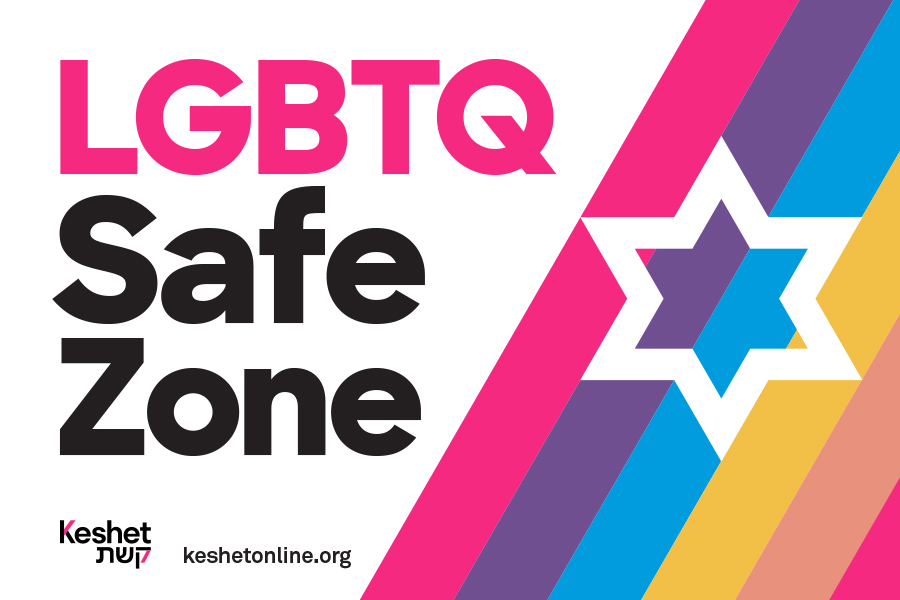
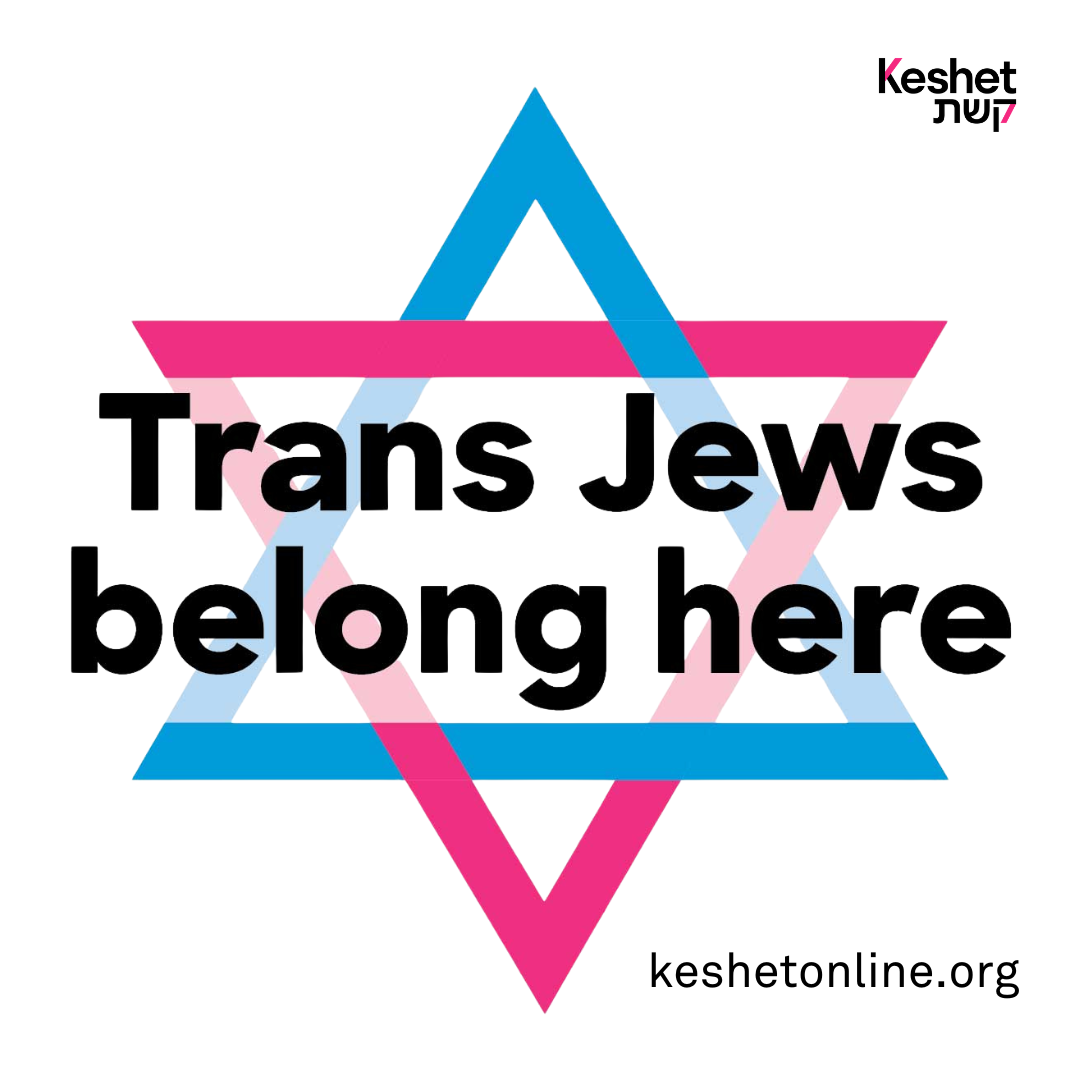
An additional way to convey support is through posting Keshet’s Trans Jews Belong Here sign and putting up LGBTQ+ Safe Zone stickers in your organizational space.
If so, use these processes to work on this statement.
If not, can you point to other examples of public statements in the recent past and determine whether you want to use similar processes this time?
If not, determine who should take ownership of this process and which stakeholders should be consulted or informed of this process.
Statements might be shared over email, added to a website landing page, included on social media, displayed in your building, or shared in other ways.
Consider how to most effectively reach your stakeholders, and also consider the ways in which these various formats call for slightly different lengths and structures of writing.
Core stakeholders often include clients/members, staff, partner organizations, board members, funders, and the community at large.
Stakeholders will include transgender and nonbinary individuals, family members and friends of transgender and nonbinary individuals, and some people who may not (yet) be familiar with the transgender and nonbinary community.
Your audiences may have varying degrees of familiarity with the current situation and be experiencing a wide range of impacts.
As you assess these various audiences, think about who most needs to hear the message that you are sharing. Are there students or families concerned about their physical and/or psychological safety in your community? Clients or potential clients wondering how they will be treated? Employees wondering how to navigate safety in the workplace?
A statement is one part of responding to this moment. However, it is rarely the whole story.
Are there existing policies and practices that this statement can call attention to? For example, does your organization already have strong nondiscrimination and anti-harassment policies that cover gender identity and expression? Has your organization already undertaken internal equity work?
Are there next steps that you can commit to in your statement? Do they have timelines? What might be ways for community members to get involved?
Avoid phrases like “they” or “us/them,” which can convey a sense of distance.
While this is an urgent moment that calls for action, it is important to avoid overstating the power of the various legislative attacks on the community. This can inadvertently leave readers feeling more overwhelmed and less able to take action.
You may anticipate (or even encounter) resistance from some stakeholders. This is true of most important things that your organization does! When crafting this statement, focus on what values you DO stand for, and try to avoid writing your statement in a way that conveys that the dignity of trans people is somehow “controversial” or “political.”
Including this in your statement both dilutes your message and actually encourages people to feel more resistance. Addressing any stakeholder concerns or hesitations is more effective when done in a genuine conversation.
Avoid language like “vulnerable,” which might convey that transgender people are weak or that the harms being experienced are due to some inherent quality of trans people rather than due to systematic targeting of the trans community.
The sample language below has been drawn from Keshet’s communications as well as from statements and communications from our partners in the field. There is no one-size-fits-all approach; What is most important is to use your organizational voice and values authentically to meet this moment.
These statements are not available for direct citation because they each reflect the distinct voice and work of the organizations who released them. They are intended to be used as inspiration and to demonstrate a range of approaches and structures. Keshet’s Education & Training Team is available to consult on specific questions or language that you may have. To request a consultation, please contact us at [email protected].
As Jews, we believe that every human being is created B’tzelem Elohim — in the divine image. To harm trans people is to betray the preciousness of each human being. To harm trans people is to deny the responsibility we all have for one another, Kol Yisrael Areivim Ze Bazeh.
– Keshet, Feb 2025
Kol Rinah remains committed to the full rights and inclusion of trans and non-binary people in our congregation, and in our world. This is fully in line with a resolution of the Rabbinical Assembly, the organization of Conservative rabbis, and how I and our movement think about how God and Torah understand the diversity and holiness of human beings.
– Kol Rinah, St Louis, MO, Feb 2025
Keshet remains unwaveringly committed to the safety and well-being of trans and nonbinary youth and their families, to a vision of a world where we all are embraced for who we are and all of us can access the healthcare we need. We urge our Jewish community leaders and institutions to send a clear message to trans youth and their families: You are beautiful and essential. Within the sanctuary of our Jewish community, you can thrive and live in safety and dignity. And we will never stop fighting for you.
– Keshet, Jan 2025
Drawing on core Jewish values, which guide the client service offerings of all Network member agencies, The Network’s U.S. public policy agenda for 2025 upholds policy priorities that are rooted in our collective mission of supporting and strengthening all communities. The Network will continue to fulfill its mission of bringing capacity building resources to its member agencies so they may:
Provide comprehensive support services for immigrants, refugees, those seeking asylum in the United States, and those who entered or were brought to the United States as humanitarian parolees.
Ensure that all individuals who identify as LGBTQ+, transgender or nonbinary receive support services from Network member agencies in an affirming, welcoming, and safe manner.
– The Network of Jewish Human Services Agencies, Jan 2025
The Federation of Jewish Men’s Clubs (F JMC) reaffirms its unwavering commitment to standing with the LGBTQIA+ community and, in particular, our trans siblings, even in the face of efforts to legally enforce a narrow and binary understanding of gender.
We recognize that such policies contradict the Jewish value of seeing every human as created B’tzelem Elohim — in the image of the Divine — and deny the rich diversity of human experience. Our tradition teaches us to pursue justice (tzedek tzedek tirdof), to love our neighbors as ourselves (v’ahavta l’reiacha kamocha), and to protect the vulnerable among us. Regardless of the legal or political landscape, we are resolute in ensuring that all people, of all gender identities or expressions, are fully embraced, respected, and celebrated in our spaces.
To that end, FJMC pledges to:
We stand firm in our belief that all individuals deserve to live authentically and with dignity. F JMC will remain a beacon of support and love for trans and LGBTQIA+ individuals, demonstrating through our actions that our Jewish values compel us to stand on the side of justice and inclusion. As such, from this moment on, F JMC will host the Pride and Trans flags on our website.
May we continue to build a world that reflects the fullness of the Divine’s creation, honoring the diversity and sanctity of all lives.
– FJMC – The Federation of Jewish Men’s Clubs, Jan 2025
Keshet envisions a world in which all LGBTQ+ Jews and our families can live with full equality, justice, and dignity. Stay connected by joining our email list and following us on social media.





National Office - Boston
1860 Washington St.
Newton, MA 02466
Phone: 617.524.9227
New York / Bay Area / Chicago / Florida / Texas